Buckingham Palace Garden

The garden at Buckingham Palace is the largest garden in London. It measures 16 Hectares (39 acres) — the size of about 22 football pitches.
It plays a key part in the busy calendar of royal events. The most famous of these events are Garden Parties, which in an average year welcome around 24,000 guests from all walks of life. For over 200 years the garden has been used by the Royal Family for official entertaining and celebratory events.
Nature in the Buckingham Palace Garden
The garden is an important area of nature within a network of green spaces in the Capital, along with the Royal Parks of Hyde Park, Green Park and St James’s Park.
Often described as ‘a walled oasis in the middle of London’, the garden is the largest private garden in the capital and contains 325 wild-plant species, 20-25 species of breeding birds, and over 1,000 trees, including 98 plane trees and 85 different species of oak.
There are around 40 boxes for birds to nest in and over 60% of them are used by garden birds such as great tits, blue tits, and robins.
Buckingham Palace Garden Lawn
The Buckingham Palace lawn is perhaps best known as the site of royal Garden Parties, held every summer. Guests are invited for their contribution to society in the UK and the Commonwealth. They can explore and enjoy the garden and many meet members of the Royal Family.
The lawn also functions as the Palace helipad, as members of the Royal Family occasionally travel by helicopter.

The Palace Lake
The central feature of the garden is the lake, created in the 19th century. It was originally fed from the overflow from the Serpentine in Hyde Park and today it is fed from the Buckingham Palace bore hole.
A ‘long-grass policy’ has encouraged the natural lakeside environment to flourish, and the area is now a favourite nesting site for a variety of water birds. The garden provides a habitat for native birds including goldcrests, sparrowhawks, the sedge warbler and lesser whitethroat. A heron often visits to stand in the shallows of the lake edge, and on summer evenings bats zig-zag across the water catching insects.
There are two islands in the garden’s lake. Recently on one of the islands, two species of endangered beetle were discovered: the Mint Flea beetle (Longitarsus ferrugineus) and the Horseshoe Ladybird beetle (Clitostethus arcuatus).

The King’s Bees
There are four hives of the Italian honey bee (Apis mellifera ligustica) on the island, looked after by the Royal Beekeeper. They produce about 160 jars of clear, golden honey every year, which is used in the royal kitchens. The hives are positioned so the bees have plenty of space to take off across the lake, away from guests.

Mulberries
In 1609, James I established a mulberry garden for the rearing of silkworms on the site. Silkworm larvae, which spin themselves a cocoon made of silk fibre, feed on mulberry leaves. Unfortunately, the wrong variety of mulberry bush was chosen and the project failed. The garden is now home to 40 different types of mulberry trees, and since 2000 it has held the National Collection of Mulberries.

Buckingham House
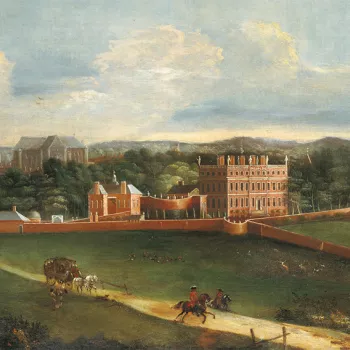
During the early 18th century, Buckingham House, the London home of the Duke of Buckingham, occupied the position where the Palace now stands. The house with its surrounding land came into royal ownership in 1761, when it was bought by George III as a private residence.
The design of the garden as seen today dates to George IV’s conversion of Buckingham House into Buckingham Palace from 1825. The new royal residence needed a suitably private garden, and George IV appointed William Townsend Aiton, who oversaw the Royal Botanic Gardens at Kew, to oversee the remodelling of the grounds.
By this date the taste for very formal gardens had been replaced by more naturalistic landscaping, inspired by the work of Capability Brown and Humphry Repton.
The Mound
Aiton’s main changes included the creation of the lake and the construction of the Mound, an artificial high bank on the south side of the garden It was built in the 1820s, possibly to hide the sight, sound and smell of the Royal Mews, where the horses are kept.
Water in the Garden
In 2022, a borehole was created to collect rainwater for the gardens, cool the air in The King’s Gallery, and manage the water level in the local area. The rainwater feeds into the London Aquifer, a groundwater source beneath the city. Relatively self-contained, the water from it can be used with minimal impact to local freshwater ecosystems.
Other Features of the Garden
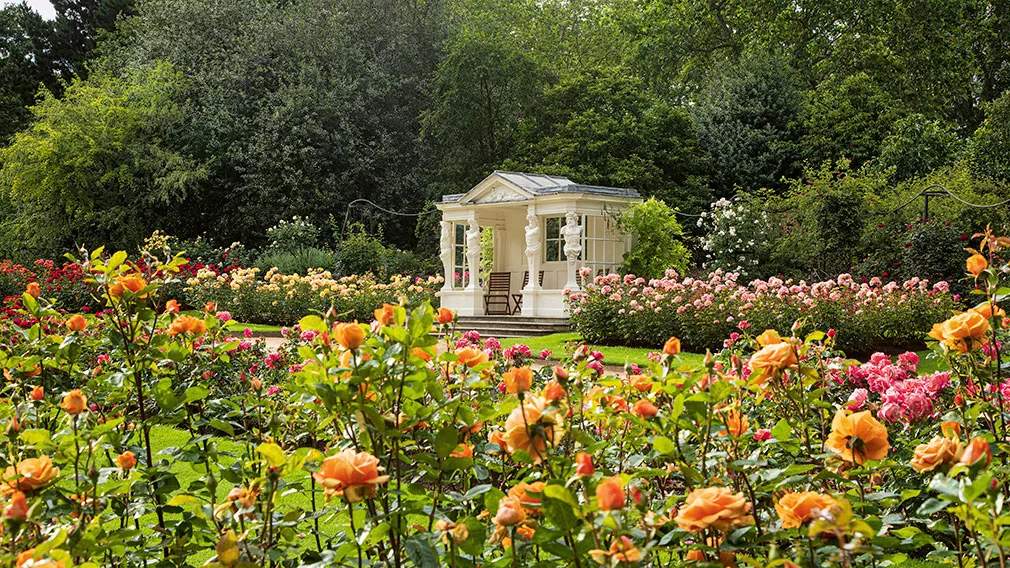
The garden also includes the 156-metre Herbaceous Border, wildflower meadow and Rose Garden. Structures in the garden include a wisteria-clad summer house, enormous Waterloo Vase made for George IV in Italy, and the Palace tennis court, where King George VI and Fred Perry played in the 1930s.
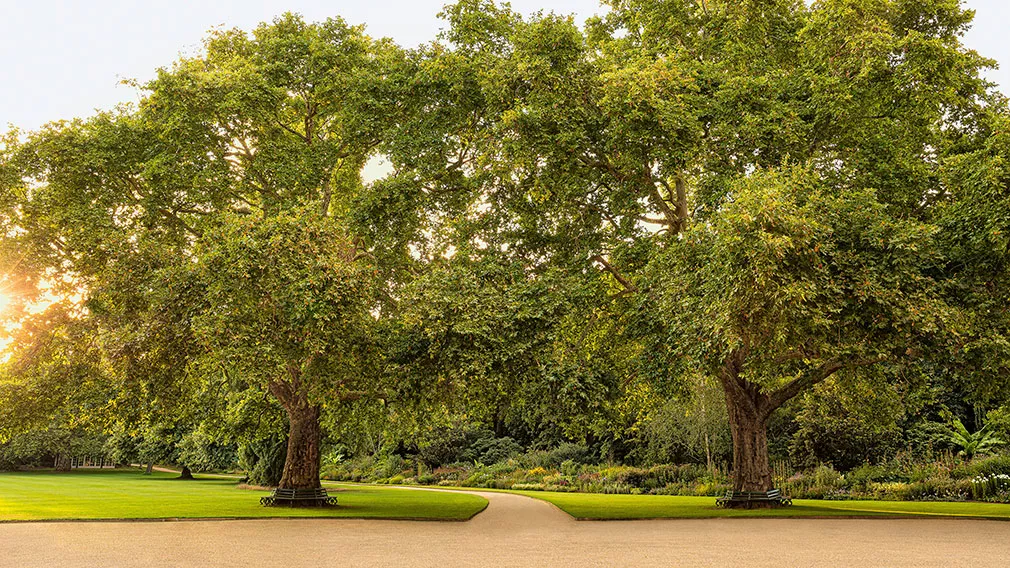
The oldest trees in the garden are a pair of London planes planted by Queen Victoria and Prince Albert more than 160 years ago.
Learn more about the garden
Also available to purchase is our beautiful book, which follows a year in the life of the royal garden at Buckingham Palace and features gardening insights and tips from Head Gardener Mark Lane.
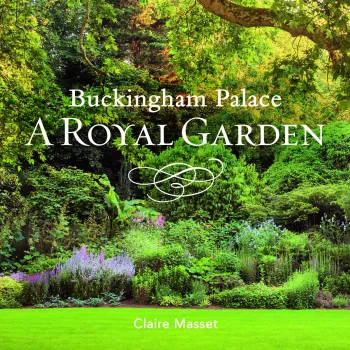
Buckingham Palace: A Royal Garden