COLLECTION STORY
Jade in the Royal Collection
Vibrant jades from around the world

Group of three small vases forming an incense set ©

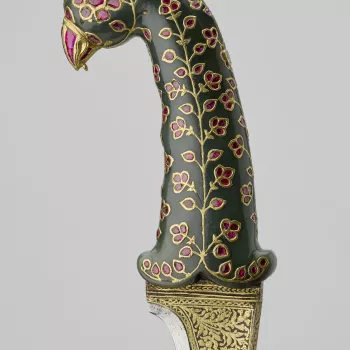
Master: Dagger and scabbardCopyright: Royal Collection Enterprises Limited
Jade has long been valued for its durability, vibrant colour and its strikingly tactile quality.
In the West, jade refers to both nephrite and jadeite. Both are silicates that are formed when pre-existing rocks are buried and undergo a process of material transformation, although jadeite is both rarer and harder than nephrite.
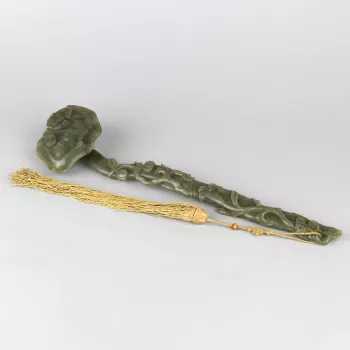
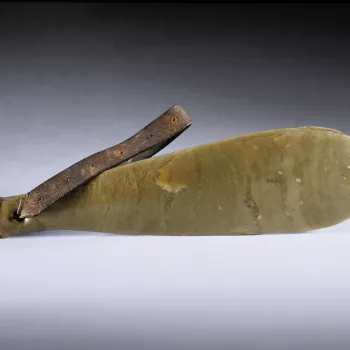
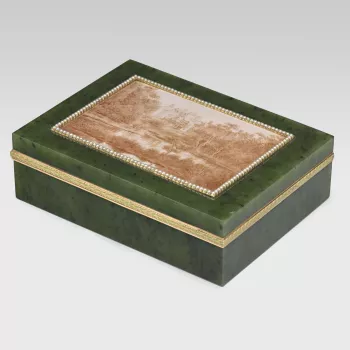
From an eighteenth century Indian dagger hilt to a twentieth century Fabergé elephant, via Maori weapons and Chinese imperial status symbols, the jade in the Royal Collection demonstrates the many manifestations of jade objects across centuries and cultures.
Find out more below: