Italian Altarpieces in the Royal Collection: 1300-1500
Prince Albert's taste in early Italian art marked him out amongst collectors

|
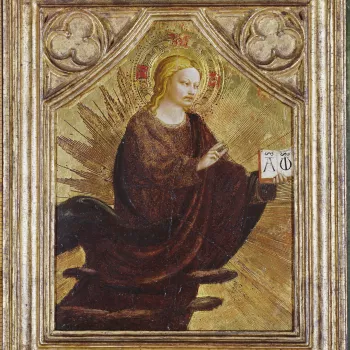
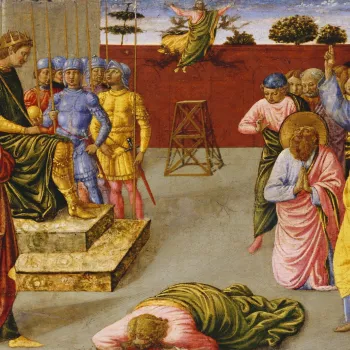
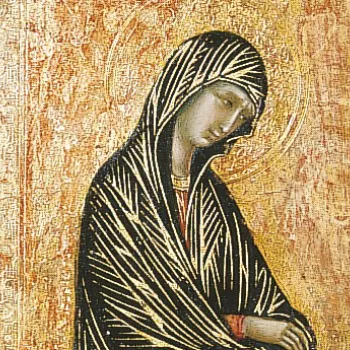
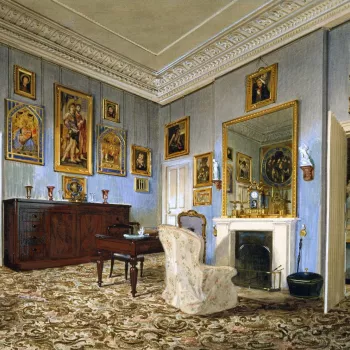
The early Italian panel paintings in this trail, dating from the fourteenth and fifteenth centuries, were brought into the Royal Collection by Prince Albert, or otherwise by Queen Victoria as gifts for her husband. The Prince's taste was pioneering. While previous monarchs had tended to favour the later Italian schools, even among the art collectors of his day Prince Albert was one of a select few who began to collect very early Italian paintings. The paintings in this trail once adorned the walls of Prince Albert's Writing and Dressing Room at Osborne House, on the Isle of Wight. This jewel-like, intimate space was hung in the spring of 1847 with nearly two dozen Italian pictures. Osborne in particular was an appropriate setting for these works as Albert had designed the house in the style of an Italian Renaissance palace. |


By Prince Albert's day, the panel paintings in this trail looked very different to how they would have originally been used and displayed in a religious context. Some were once part of much larger and elaborate altarpieces. In the Christian tradition, an altarpiece is the decorated structure often placed on or behind an altar in a church, oratory or other religious setting.
It is not uncommon for Italian altarpieces to have been destroyed, or cut up and their fragments dispersed. This might be because of the changing function or demolition of a church, combined with fashions in collecting. The suppression of religious institutions in Italy – not least under Napoleon and the French in the first two decades of the nineteenth century - meant that there were increased opportunities for collectors to acquire these kinds of works.